Identify Rocks & Minerals from a Photo
Snap or upload a photo to instantly identify rocks, crystals, gemstones, and gold-bearing veins. Get Mohs hardness, mineral properties, diagnostic tests, and value estimates on screen for free.


Drop your rock photo here to identify for free
Snap or upload any rock, crystal, mineral, or stone. Our AI analyzes texture, color, and cleavage instantly.
The Lookalike Spotter
Don't get fooled by deceptive stones. Compare commonly confused minerals side by side and learn the exact field tests to verify them.
Native Gold
Pyrite / Chalcopyrite
Real gold never leaves a dark streak on unglazed ceramic tile. Pyrite always leaves a greenish-black powder streak.
Everything you need for rock identification
Our AI-powered scanner makes rock identification effortless, helping you identify igneous, sedimentary, and metamorphic rocks instantly.
Instant Rock Recognition
Identify any rock minerals with a single photo scan.
Our advanced AI recognizes over 1000+ rock minerals including igneous, sedimentary, metamorphic rocks, and reclaimed stone from textures and colors.
Mineral Composition
Get detailed information about rock quality and grade.
Identify mineral composition, density, and durability scores to help you choose the right rock for your lapidary projects.
Crystal Structure Detection
Analyze unique mineral cleavage and fracture patterns.
Identify cleavage, fracture, crystal habits, and luster in rock.
Physical Properties
Learn about workability and tool requirements.
Get insights on how different rock minerals behave with tools, finishing requirements, and best practices for your projects.
Identify rock minerals in three simple steps
Our intuitive rock scanner makes rock identification quick and accurate for any project.
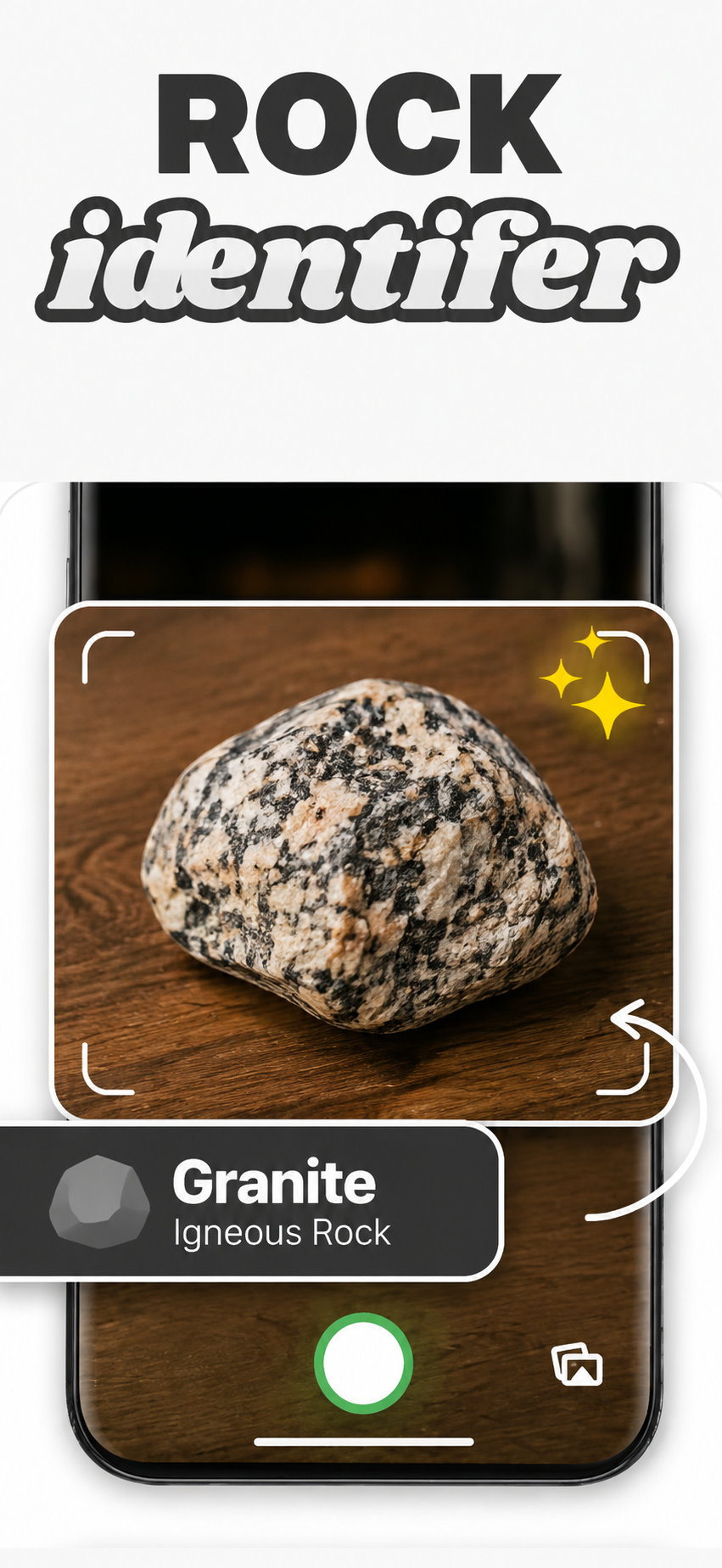
1. Scan Rock Sample
Take a clear photo of the rock surface, crystal structure, or surface using your smartphone camera for best identification results.
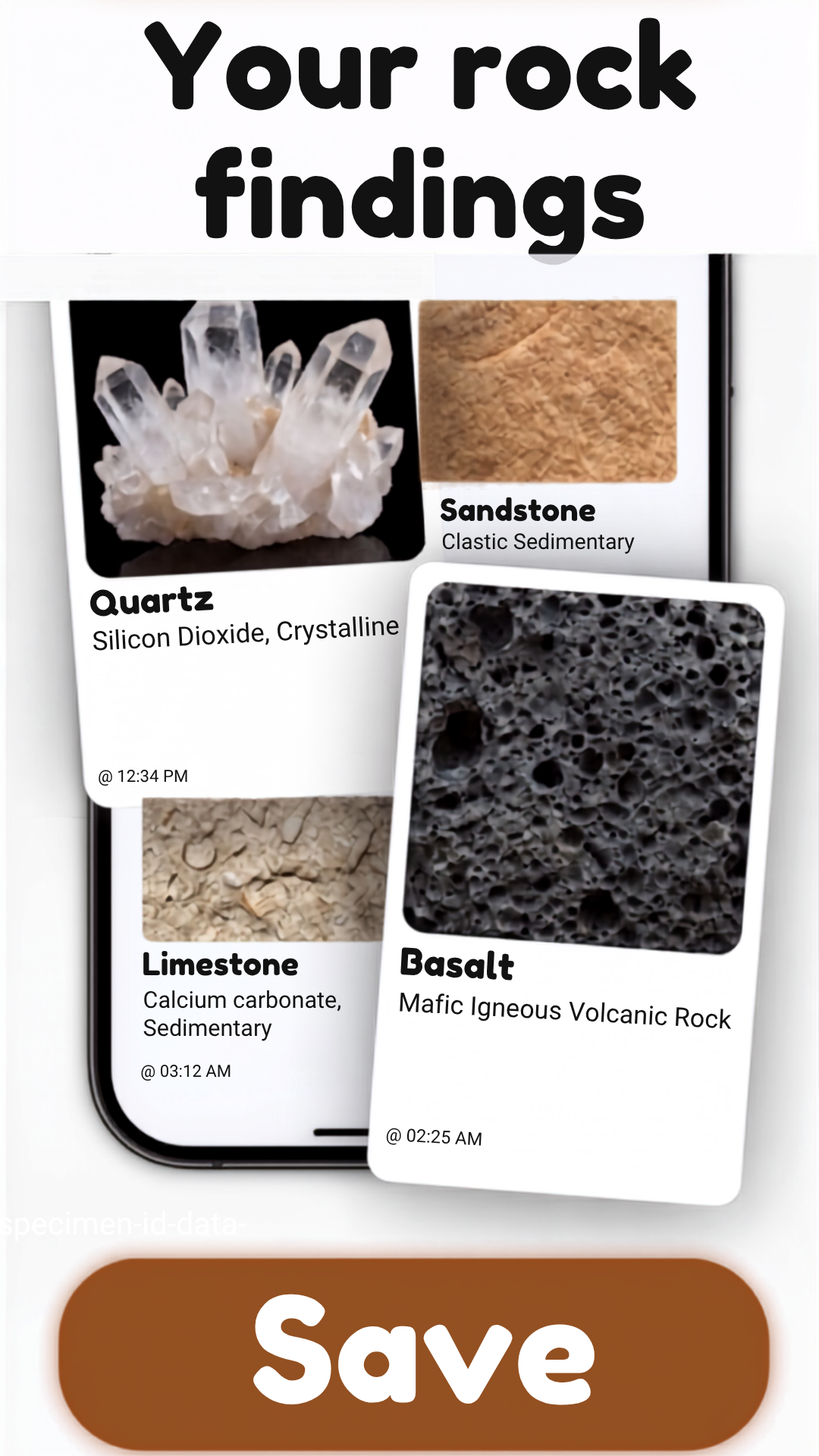
2. AI Analysis
Our advanced AI analyzes colors, textures, and crystal structure to identify the rock minerals from our database of 1000+ stone types.
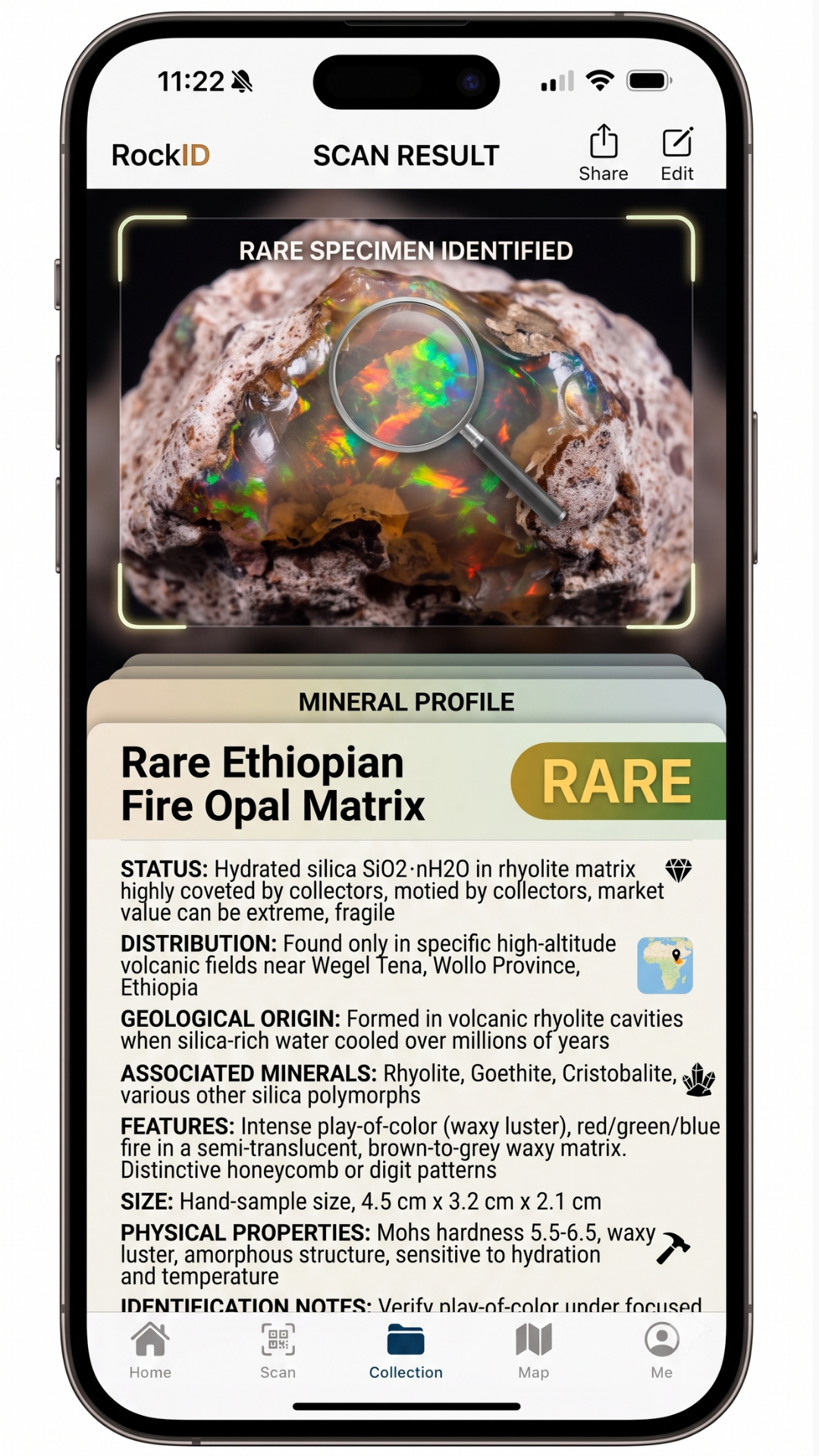
3. Get Detailed Results
Receive comprehensive information about the rock minerals, including properties, uses, hardness rating, and lapidary tips.
The Complete AI Rock Identifier & Mineral Guide
Everything you need to know about identifying stones, crystals, minerals, fossils, and precious metals from photos.
Specialized Identification Tools
Looking for a focused scanner? Explore our dedicated identifier tools for stones, crystals, minerals, gemstones, diamonds, fossils, gold, and silver:
Identify igneous, sedimentary, and metamorphic rocks with AI texture and cleavage analysis.
Identify tumbled river rocks, landscape pebbles, masonry stones, and polished gravel.
Distinguish genuine amethyst, quartz, fluorite, and selenite from glass counterfeits.
Analyze streak, crystal habit, luster, and specific gravity for over 1,000 mineral species.
Identify raw and faceted precious gems like rubies, sapphires, emeralds, and opals.
Separate rough and cut diamonds from moissanite, cubic zirconia, and white topaz.
Classify ancient trilobites, ammonites, petrified wood, crinoids, and shark teeth.
Confirm native lode and placer gold while eliminating fool’s gold (pyrite and mica).
Test raw silver ores, wire silver, nuggets, hallmarks, and silver lookalikes.
What Rock Is This? How Modern AI Rock Identification Works
When you stumble upon an unusual specimen along a mountain trail, creek bed, or backyard excavation, your immediate question is: what rock is this? In the past, answering that question required carrying heavy geological encyclopedias, streak plates, scratch picks, and chemical acid dropper bottles into the field. Today, our rock identifier leverages modern artificial intelligence and computer vision neural networks to examine geological specimens in seconds.
A photograph captures crucial macroscopic clues that geologists evaluate at a sorting table: crystal habit, grain size, fracture patterns, cleavage planes, surface luster, porosity, and mineral veining. Rather than simply comparing basic surface colors (which can be misleading due to weathering, staining, or mineral impurities), our rock identification engine evaluates subtle structural characteristics to distinguish between common rocks like granite, basalt, sandstone, limestone, and schist.
What Kind of Rock, Stone, or Mineral Did You Find?
To understand what kind of rock is this or what kind of stone is this, it helps to understand how geologists classify all geological matter on Earth into three primary parent families:
- Igneous Rocks: Born from molten magma or volcanic lava that solidified upon cooling. If it cooled deep underground over thousands of years, it formed coarse interlocking crystals like granite, diorite, and pegmatite. If it erupted on the surface and cooled rapidly, it produced fine-grained basalt, glassy obsidian, or porous pumice.
- Sedimentary Rocks: Formed through millions of years of weathering, erosion, mineral deposition, and compaction. Common examples include sandstone (cemented quartz grains), limestone (composed of marine calcite shells), and shale (compacted mud and clay). If you wonder what kind of fossil is this, sedimentary strata are the exclusive home of fossilized remains.
- Metamorphic Rocks: Existing rocks that underwent profound physical and chemical transformations under extreme subterranean heat and tectonic pressure without completely melting. Limestone metamorphoses into crystalline marble, shale transforms into slate and shimmering schist, and quartz sandstone recrystalizes into indestructible quartzite.
When dealing with individual crystals or single chemical compounds, the question shifts from rock classification to mineralogy: what crystal is this or what mineral is this? While a rock is an aggregate of several minerals (for instance, granite contains quartz, feldspar, and biotite mica), a mineral represents a single naturally occurring solid with an exact chemical formula and crystal lattice.
How to Tell If a Rock, Stone, Crystal, Gemstone, or Gold Is Real
Rockhounds and collectors frequently encounter lookalikes, synthetic imitations, painted slag, and counterfeit minerals. Knowing how to tell if a rock is real, how to tell if a stone is real, or how to tell if a crystal is real comes down to five fundamental diagnostic tests you can perform at home:
1. The Mohs Hardness Scratch Test
Minerals possess a fixed resistance to scratching rated 1 to 10 on the Mohs scale. Your fingernail is 2.5, a copper penny is 3.5, a steel pocketknife is 5.5, quartz is 7.0, and diamond is 10.0. To know how to tell if a diamond is real, remember that only another diamond or moissanite can scratch its surface. Real quartz will readily scratch glass, while glass imitations will not scratch quartz.
2. Unglazed Porcelain Streak Test
Rubbing a specimen across the back of an unglazed white ceramic tile leaves a powder streak that reveals its authentic chemical color. To discover how to tell if gold is real, perform this test: genuine native gold leaves a warm golden-yellow streak, whereas fool's gold (pyrite) leaves a greenish-black streak. For silver, genuine native silver yields a shiny white-to-grey streak.
3. Thermal Conductivity & Cold Touch
To determine how to tell if a gemstone is real versus colored plastic or resin, touch the stone to your upper lip or forehead. Real gemstones and natural crystals have high thermal conductivity and feel instantly icy cold to the touch. Plastics and resin imitations feel warm or room-temperature immediately.
4. Magnetism, Heft & Specific Gravity
Native gold (specific gravity 19.3) and native silver (specific gravity 10.5) feel remarkably heavy in the palm compared to their size. If you want to know how to tell if silver is real or how to tell if a mineral is real, observe heft and magnetic attraction. Neither gold nor silver is magnetic; if a gold nugget jumps to a neodymium magnet, it contains iron or magnetite.
5. Magnification & Air Bubble Inspection
Inspect the specimen under a 10x jeweler's loupe. In natural crystals and gemstones, you will observe geometric growth lines, natural mineral inclusions (jardin), and cleavage planes. In artificial glass and synthetic imitations, you will frequently spot round spherical air bubbles and swirling flow lines created during melting.
Identifying Precious Gems, Fossils, and Native Metals
When exploring pegmatites or placer gravels, discovering what gemstone is this or what diamond is this requires checking optical properties like refractive dispersion and birefringence. Raw diamonds typically present in octahedral (eight-sided double pyramid) crystal systems with an unmistakable adamantine luster. Raw emeralds form hexagonal prisms, while sapphires and rubies (corundum, Mohs 9) form hexagonal bipyramids or barrel shapes.
If your discovery appears metallic, asking what gold is this or what silver is this is common among prospectors. Native gold exists in two primary forms: lode gold (delicate crystalline wires and nuggets encased in milky quartz veins) and placer gold (water-rounded flakes and nuggets collected in river gravels). Gold is exceptionally malleable: pressing a fine sewing needle into real gold will produce a soft dent, while brittle pyrite or chalcopyrite will immediately crumble into powder.
For paleontological finds, asking what fossil is this or how to tell if a fossil is real involves examining biological symmetry and cellular microstructure. Authentic petrified wood displays distinct annual growth rings and porous wood fiber conduits. Real fossilized teeth (such as megalodon or prehistoric shark teeth) feature glossy enamel crowns and dark, porous mineralized root bone, unlike cast resin replicas which lack internal trabecular bone porosity.
Why Use a Dedicated Rock Identifier Tool?
General visual search engines (such as Google Lens) are trained on general commercial web images, frequently returning shopping links, jewelry listings, or decorative homeware when shown a rock. Our dedicated rock identifier is trained exclusively on geological collections, mineralogical survey catalogs, and museum-grade specimens.
Whether you are an experienced geologist evaluating fault line lithology, a rockhound scouring BLM gravel bars for agates, or a curious student wondering what kind of mineral is this, our free online rock scanner gives you an instant, trustworthy first opinion on screen—complete with Mohs hardness ratings, scientific formula, diagnostic home checks, and estimated market values.
Loved by rockhounds and geologists worldwide
See what professional lapidarists and DIY enthusiasts say about Rock Identifier AI Scanner.

Mike R.
Professional Geologist
"This rock scanner has been a game-changer on field trips. I can instantly identify rock minerals and make informed decisions about my collection. The accuracy is incredible!"

Sarah L.
Gemologist
"As a jewelry designer, knowing rock minerals is crucial. This app helps me identify rough stones and exotic gems for my custom pieces. It's like having a geology expert in my pocket!"

Tom K.
DIY Enthusiast
"I'm new to lapidary and this app has taught me so much! I can identify rock at rock shops and learn about textures and colors. The educational content is fantastic."
Frequently Asked Questions
Everything you need to know about identifying rocks, gold prospecting, gemstone hunting, and our AI rock scanner.
Have an unidentified mineral or rock specimen? Snap a photo in the Rock Identifier App for instant AI detection.
Start identifying rock minerals today
Join thousands of geologists, rockhounds, and DIY enthusiasts who trust our AI scanner for accurate rock identification.
Free download • Premium features available • 98% accuracy rate